What Happens to Your Attic Insulation After a Rainy Season
What Happens to Your Attic Insulation After a Rainy Season
San Diego’s rainy months look gentle from the street, yet attics tell a harder story. After weeks of marine layer drizzle along La Jolla and Pacific Beach, and heavier winter storms rolling inland through Mira Mesa, Rancho Bernardo, and Escondido, attic insulation often comes out of spring wetter, heavier, and less effective. In San Diego County the issue rarely stops at moisture. Roof rats thrive in the Mediterranean climate and follow the shelter and food created by rainfall. The result is a mix of damp insulation, mold risk, and fresh rodent contamination that undermines energy performance and indoor air quality. This is where a coordinated approach that blends attic clean up and rat proofing makes the difference between short-term relief and a full reset that lasts.
Why rainy season matters for San Diego attics
San Diego County spans humid coast, hot inland valleys, and older urban core homes. Each zone reacts to rain in its own way. In coastal neighborhoods like La Jolla, Ocean Beach, and Point Loma, marine layer humidity lingers under roof decks and along north-facing rafters. That moisture wicks into fiberglass and cellulose. In inland neighborhoods like Scripps Ranch, Carmel Mountain, Poway, and Escondido, a wet winter is usually followed by 130-degree summer attic temperatures that cook any damp residue left behind. The cycle accelerates fiber breakdown and drives odors into living areas through ceiling penetrations.
The same rains that swell the bougainvillea and fruit trees along Highway 56 and Interstate 5 also boost roof rat movement along fences, palm fronds, and overhead lines. Roof rats favor Spanish tile and clay tile rooflines where lifted tiles and unprotected eave gaps create perfect pathways into attics. In San Diego County, most attic contamination jobs are roof rat jobs rather than Norway rat or house mouse. That is a shareable local fact that surprises many homeowners and explains why attic clean up and rat proofing often go together after winter storms.
What water actually does to common insulation types
Water does not treat all insulation the same. Fiberglass batts lose loft when wet. The glass fibers do not absorb water, but the air pockets collapse and the binder can fail. Once the batt is compressed or matts down from moisture, its R-value drops. Blown-in fiberglass has the same problem when it clumps. Cellulose, whether GreenFiber or TAP Insulation, absorbs water more readily than fiberglass. It can dry, but only with airflow and time. If it remains damp on the attic floor, mold risk rises along the sheathing and top plates. Mineral wool like Rockwool resists water absorption better and can maintain structure, but it still traps moisture if the deck above leaks. Spray foam like Icynene can hide deck leaks by holding water against the sheathing. In every case, long-term dampness or repeated wetting degrades performance and can set up odor, bacterial growth, and dust mite activity.
In urban core homes from Mission Hills to North Park and Kensington, original vermiculite or cellulose under newer layers adds a safety wrinkle. Vermiculite in pre-1990 homes can carry asbestos concerns. After a rainy season, disturbed layers can release dusty particulates when a homeowner tries to self-dry or re-fluff the insulation. This scenario calls for HEPA-filtered negative-air extraction, sealed bag removal, and asbestos-era protocols if vermiculite is present. It is common in houses near Balboa Park and Hillcrest that date back to the 1920s through the 1950s.
Hidden moisture pathways most San Diego homeowners miss
Water intrusion is not always a dramatic drip. Along the coast, wind-driven rain pushes under lifted clay tiles and through unsealed roof penetrations. In Rancho Bernardo and Scripps Ranch, worn pipe boots and flashing around bathroom vents let fine spray in during peak downpours. Compound that with unsealed recessed lighting cans and top plate gaps and you get slow, repeat moisture that settles into insulation near light fixtures and around chases. The attic may look dry after a week of sun, yet the insulation feels heavy and clumpy when lifted by hand.
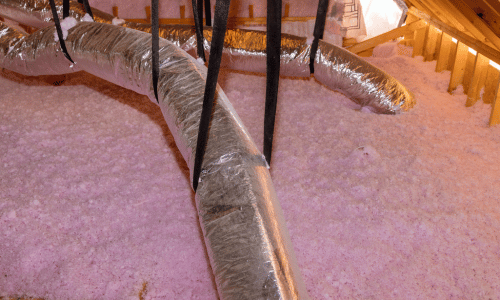
Another quiet path is condensation on cold metal ductwork during damp nights. If ducts sweat over blown-in insulation, that moisture adds up through the season. Duct leaks then spread that moisture and any rodent residue into the HVAC system. In older homes routed with returns near the attic plane, the HVAC return air pathway can draw airborne particulates from the attic down through ceiling penetrations every time the system runs. That means rodent contamination in the attic does not stay in the attic. It circulates through bedrooms and living areas from Encinitas to Chula Vista whenever the air handler switches on.
Rodent activity spikes after rains in San Diego
Roof rats love the post-rain growth along San Diego canyons and streets. Fruit trees in Encinitas and Oceanside drop soft leftovers. Palm skirts provide cover near Mission Bay. Ivy and bougainvillea climb into eaves along older stucco homes in Normal Heights and University Heights. With mild winters, roof rat breeding barely slows. When homeowners report hearing scurrying above the ceiling after a storm, it is often roof rats traveling along the ridge vents and eave lines to feed and nest.
Rain also washes scent trails clean outdoors, which sends rodents hunting new paths. They probe soffit vents, ridge caps, and utility penetrations. In homes with composition shingles in Mira Mesa or El Cajon, gaps around electrical conduits and plumbing stacks offer easy access points. In Spanish tile homes in La Jolla or Del Mar, lifted tiles and unprotected bird-stop gaps become on-ramps. Once inside, they strip insulation for nesting, compress batts, and mark routes with urine pheromone trails that attract more activity. This is why post-storm service plans pair attic clean up and rat proofing together rather than treating them as separate projects.
Energy performance and IAQ problems that show up in spring
The first sign is often a musty attic odor each time the heater or AC kicks on. Next comes a slight dustiness in rooms that never quite settles. Families in Carmel Valley and Rancho Peñasquitos report morning congestion that eases when leaving the house for the day. In several spring inspections off Interstate 15 near the 92127 and 92128 corridor, technicians have found damp cellulose under bathroom penetrations combined with fresh rat droppings along joists and chewed duct wrap. The combination drops the functional R-value of the attic and loads the return pathway with fine particulates.
Onshore marine layer pushes humidity through coastal attics. Inland heat then bakes that moisture. The cycle breaks down fibers and releases volatile compounds from rodent residue. That is why indoor allergies seem worse after winter and early spring in inland homes that hit 130 degrees in July and August. For families near Lake Hodges, Daley Ranch, and Escondido Creek, where canyon-edge properties invite recurring rodent pressure, a once-a-decade cleanup is rarely enough. Attic clean up and rat proofing must be an integrated annual or biennial discipline if entry points and vegetation create a permanent draw.
Material choices that stand up better after rainy seasons
Once water and rodent activity have compromised the attic, the replacement plan matters. TAP Insulation, a borate-treated blown-in cellulose, is often the right call for previously contaminated spaces in San Diego. The borate blend resists insects and deters rodents from nesting. When installed to meet the R-38 California Title 24 standard, TAP achieves strong thermal performance. In hot inland attics, a high-efficiency R-49 target can reduce summer HVAC runtime. Owens Corning and Knauf blown-in fiberglass also perform well when rodent pressure is low and air sealing is complete. For coastal La Jolla and Coronado properties where marine layer moisture lingers, Rockwool mineral wool resists water absorption and holds structure if a future leak occurs. In premium cases, Icynene spray foam can create an air-sealed roof deck, though it requires vigilant roof monitoring since it can attic debris removal mask slow leaks behind the foam layer.
Install quality matters as much as product choice. Baffle placement at soffits keeps airflow clear. Proper depth markers confirm uniform R-value coverage across low-eave bays common in Point Loma bungalows. Air sealing at top plates, chases, recessed lighting cans, plumbing stacks, and the attic hatch stops the HVAC system from pulling attic air into living spaces. Without this sealing, even the best insulation underperforms and compounds allergy issues for families all along Interstate 8 from Mission Valley to El Cajon.
Proofing the structure while the insulation is out
Rainy season recovery is the prime window for exclusion. With old insulation removed, entry points that were buried under fibers become obvious. Technicians can trace daylight through eave gaps, spot rub marks along roofline penetrations, and see gnaw points at plumbing and electrical penetrations. San Diego standards call for quarter-inch galvanized hardware cloth at gable and roof vents, as it is a chew-resistant gauge that blocks roof rat access without stalling ventilation. Steel wool pack at small penetrations backs weather-resistant sealant. Larger utility chases accept rigid metal screening anchored into framing. Garage door bottom seals and side brush seals matter too, since garages feed attic spaces in homes off Highway 78 in Vista, San Marcos, and Carlsbad where workshops and storage attract rodents.
Exclusion is not the same as pest control. Bait-only programs drop activity for a few weeks, then rodents return through the same holes. Attic clean up and rat proofing closes those holes and then cleans, decontaminates, and sanitizes the contaminated structure. San Diego’s roof rat pressure and tile-roof architecture make this approach essential. It is also the point where a lifetime warranty on sealed entry points has real value in a county where activity can recur each rainy season.
What an integrated cleanup and sanitization looks like after winter
Rainy season cleanup starts with containment. Plastic sheeting isolates the attic hatch and work area. A 20-horsepower industrial HEPA-filtered vacuum extracts loose insulation and droppings while air scrubbers with HEPA filtration manage airborne particles. Sealed disposal bags leave through controlled pathways to keep living rooms and hallways clean. Joists and sheathing then receive a hospital-grade EPA-approved disinfectant applied by thermal fogger for deep penetration. In severe contamination zones, ULV cold fogging adds coverage inside tight bays. Urine pheromone trail neutralization targets the chemical signals that draw rodents back along the same paths. Only after the structure is clean does replacement insulation go in, followed by final air sealing and vent screen reinforcement.
The cleanup discipline is the same from North Park to Chula Vista. What changes is the microclimate calibration. Coastal properties get an added focus on mold-prone rafters and north-facing sheathing. Inland properties get post-cleanup ventilation checks, since summer heat makes airflow baffle layout and ridge vent function critical. Homes near the San Diego Zoo Safari Park in Escondido and valley pockets off Highway 67 in Santee get extra attention to canyon-edge exclusion where rats follow natural drainages.
Rain-to-summer timeline and why speed matters
The weeks after the last significant rain are ideal for inspection. Materials are still telling the truth. Water marks are fresh. Rodent tracks and rub marks are visible before summer dust hides them. If cleanup waits until July in inland neighborhoods like El Cajon or Rancho Bernardo, high attic temperatures amplify odors, accelerate fiber breakdown, and drive more particulate into the HVAC return path. An early spring plan that bundles attic clean up and rat proofing with insulation replacement sets the house up for a cleaner, cooler summer.
Clear signals your insulation was hit this season
- Musty or ammonia-like odor through supply vents when HVAC starts
- Gray or brown spotting on insulation under roof penetrations or around cans
- Crinkling or scurrying sounds at night above bedrooms, especially near eaves
- Uneven attic insulation depth, matted lanes, or visible trails across joists
- Rising energy bills despite mild outdoor temperatures in spring
Homeowners along Interstate 805 in Clairemont and University City often describe a stale living room smell that fades when windows open. In Encinitas and Solana Beach, spot checks at the eaves reveal salt-crusted dampness on old fiberglass. In Vista and San Marcos near 92078 and 92084, attic access inspections have found fresh citrus peels nested with chewed fiberglass after backyard harvests. Each sign points to a post-rain combination of moisture and rodent activity that calls for integrated service rather than a single trade fix.
Cost benchmarks for 2026 San Diego projects
Across San Diego County, the numbers cluster within predictable ranges. Free inspections are standard for reputable contractors. Entry-level cleanup specials that address light debris run around 75 to 300 dollars. Standard decontamination with sanitization typically falls between 400 and 1,200 dollars depending on attic size and severity. Cleanup combined with full insulation removal often ranges from 800 to 2,500 dollars. Full attic restoration packages that include removal, sanitization, air sealing, exclusion, and insulation replacement typically run 3,500 to 7,000 dollars.
Standalone rodent proofing in 2026 usually ranges from 600 to 2,500 dollars, driven by entry point count and roof complexity. Spanish tile and multi-level rooflines push work to the top of the range. Insulation removal and replacement projects run 800 to 2,500 dollars for standard scopes, 2,500 to 5,000 dollars for high-efficiency R-49 upgrades, and 5,000 to 8,000 dollars for premium mineral wool or spray foam tiers. Coastal properties that require mold remediation protocols, and urban core homes with vermiculite that triggers asbestos-era handling, sit higher due to safety and containment measures.
Neighborhood snapshots from recent rainy seasons
La Jolla 92037 and Pacific Beach 92109: Spanish tile roofs with lifted corners let wind-driven rain in around skylights. Insulation beneath shows damp streaking and droppings along rafters. The fix pairs hardware cloth at bird-stops and ridge vents with TAP Insulation and careful baffle setup to keep airflow under the deck in the marine layer.
Carmel Valley along Highway 56 and Rancho Peñasquitos 92129: Composition shingle roofs with aging vent boots leak during peak storms. Moisture flattens blown fiberglass around bathroom vents. Rodents follow plumbing penetrations into the attic. Exclusion with steel wool and weather-resistant sealant at small penetrations, hardware cloth at vents, and air sealing at cans stabilizes the envelope before new Owens Corning or TAP is installed to R-38 or R-49.
Mira Mesa 92126 and Scripps Ranch 92131: Winter leaks are light yet repeated. Summer heat then bakes residue and amplifies odors. Families report morning congestion. Cleanup, ULV cold fogging of joists with an EPA-approved antimicrobial, and air sealing at top plates resolve the IAQ complaints. A high-efficiency R-49 install reduces summer load on the HVAC system.
Mission Hills 92103, North Park 92104, and Kensington 92116: Attics hold layered cellulose over suspected vermiculite. Even a small roof leak near a gable pushes moisture into old fill that turns musty. HEPA extraction with sealed bags, vermiculite protocols, and targeted rodent exclusion around original gable vents clean the structure. Mineral wool performs well in these homes due to occasional wind-driven moisture and tight eave bays.
Escondido 92029 and San Marcos 92078: Canyon-edge lots near Lake Hodges draw recurring roof rat activity. Post-rain inspections find urine-soaked fiberglass trails to HVAC ducts with chew marks. Full attic clean up and rat proofing with quarter-inch galvanized hardware cloth at vents and reinforced garage door seals shut down re-entry. TAP Insulation and duct wrap repair finish the reset.
A shareable San Diego reality about roof rats and insulation
Three factors make San Diego one of the most roof-rat-pressured attic markets on the West Coast. The Mediterranean climate supports year-round breeding rather than seasonal bursts. The lush plant mix of citrus, palm, bougainvillea, and ivy creates food and cover in nearly every neighborhood from Coronado to Oceanside. Spanish tile roof architecture provides countless small entry points that align with rodent climbing habits. The result is that most attic contamination cleanup jobs in the county involve roof rats rather than house mice or Norway rats. After rainy seasons, that pressure jumps. That single fact explains why bundling attic clean up and rat proofing is the standard of care here rather than a special request.
Indoor air quality pathways that link attic and bedrooms
Most local homes do not have a perfect air barrier between attic and living space. The stack effect pulls air upward through light fixtures, bath fans, and unsealed chases. The HVAC return air pathway often intensifies the draw. When insulation is damp or contaminated, the air that moves through those penetrations carries particulates and bacterial residue. Families notice the effect most in closed rooms at night. This is why any recovery after rains should include the combined plan of extraction, sanitization, and air sealing before the new insulation goes in. Without sealing, new material can still ride the HVAC return loop with attic air leaking around it.
Trade-offs and judgment calls technicians make in the field
Not every wet patch triggers full removal. If a small section under a single vent shows light moisture staining with no odor and no droppings, selective removal and spot fogging may be enough. If contamination runs along multiple bays with urine-bleached tags and compressed paths, a full extraction is the right call. In coastal La Jolla and Del Mar, technicians often balance a mold risk profile against total removal by inspecting rafters, nail tips, and north-facing sheathing for micro-growth that does not always show in photos. In inland Escondido and El Cajon, they factor in whether June heat will amplify a mild odor into a house-wide complaint by August. The right choice is rarely a guess. It is a pattern built from hundreds of attics across 92101 to 92130 and the North County corridor from 92024 through 92029.
Why coordination beats calling three different vendors
Rain-season recovery touches multiple trades. Removal, sanitization, exclusion, air sealing, and insulation replacement must align in sequence. If a pest company sets traps but leaves the holes open, contamination continues. If an insulation installer blows new material over droppings, odors linger and allergies flare. If a general contractor seals vents without netting airflow, summer heat spikes. An integrated team handles attic clean up and rat proofing, pairs it with HEPA extraction and hospital-grade sanitization, then installs R-38 or R-49 insulation with documented air sealing. That is the level that holds up through another winter and the 130-degree inland summer.
When a simple repair is not enough
Homeowners sometimes ask if they can just replace the vent boot or caulk a gap. In San Diego County, rain intrusion and roof rat activity travel together more often than not. A single boot repair may stop new water, but it does not remove what the last storm left behind or stop rodents that mapped the path. If odor, dust, or allergy symptoms showed up this spring, the odds are high that the attic needs a combined reset. The service scope may be modest if caught early. The key is to look quickly after the last storm system clears.
Service signals for San Diego map pack searches
San Diego homeowners often search based on pain signals. Scratching above a bedroom ceiling in Carmel Valley points to roofline gaps near bird-stops. A musty smell in a 92104 North Park bungalow suggests wet cellulose and possible vermiculite beneath. Rats in a 91910 Chula Vista garage often lead to attic droppings above the laundry. These cases get solved with a single coordinated service: attic clean up and rat proofing. It appears in spring calls from La Mesa 91941 to Oceanside 92054, and again after the first heat wave bakes residues left from winter. The fastest route to a lasting fix is a single contractor that documents the attic, seals the house, and restores the insulation to code.
A short checklist San Diego homeowners can reference
- Was there rain-driven staining under any roof vent or stack this winter
- Did anyone hear scurrying along eaves or ridge lines after storms
- Does the HVAC kick on with a slight must or ammonia-like odor
- Are batts matted down or are there trails across blown-in insulation
- Have spring allergies or morning congestion increased indoors
If any answer is yes in neighborhoods from Solana Beach 92075 to Poway 92064, the attic likely needs a combined response. The integrated fix aligns with how San Diego’s climate and housing stock behave after rainy seasons.
Local logistics and access that shorten the timeline
For North County properties off Highway 78 in Vista, San Marcos, and Escondido, direct access to Auto Park Way and Interstate 15 keeps mobilization quick. Homes along Interstate 5 from Del Mar and Encinitas through Carlsbad and Oceanside see fast dispatch between coastal jobs. City of San Diego addresses in the 92101 to 92130 corridor connect through Highway 56, Highway 163, and Interstate 805. That reach matters most in spring when rodent activity rises countywide and homeowners want attic clean up and rat proofing handled before summer heat arrives.
Standards and code that anchor replacement decisions
California Title 24 sets R-38 as the insulation baseline for attic planes in San Diego’s climate zone. That standard ensures the home performs close to design conditions in a mild winter and resists heat gain in summer. Many inland homeowners choose R-49 to reduce peak summer runtime. Proper attic air sealing at top plates, chases, and penetrations is not a nice-to-have. It is essential to make any R-value deliver what the label promises. Vent screens must maintain airflow and insect control while blocking rodent entry. Quarter-inch galvanized hardware cloth remains the chew-resistant standard that meets those goals at gable and roof vents across diverse roof types.
The bottom line after a San Diego rainy season
Moisture and rodents work as a pair in this county. Rain opens pathways and weakens materials. Roof rats move in along bougainvillea, palm fronds, and tile edges. Insulation loses loft, traps odors, and spreads particulates through HVAC pathways. The fix is not a patch. It is a short, disciplined sequence that cleans, decontaminates, seals, and restores. Homeowners in La Jolla, Mission Hills, Carmel Valley, Mira Mesa, Rancho Bernardo, Scripps Ranch, Encinitas, Carlsbad, Oceanside, Del Mar, Poway, Escondido, San Marcos, Vista, El Cajon, La Mesa, Chula Vista, and Coronado see the same pattern each spring. The projects that last are the ones that treat the building as a system and make attic clean up and rat proofing the core of the plan.
Schedule a post-rainy-season inspection and quote
AtticGuard operates from 510 Corporate Drive Suite F in Escondido 92029 with daily coverage across the City of San Diego, North County, East County, and South Bay. The team provides a free attic inspection with documentation photos and a written quote before any work. Same-day estimates are available along Interstate 5, Interstate 8, Interstate 15, Highway 56, and Highway 78 corridors. Projects combine attic clean up and rat proofing with HEPA-filtered industrial vacuum extraction, plastic sheeting containment, sealed disposal, thermal fogging with hospital-grade EPA-approved disinfectants, ULV cold fogging for severe contamination, urine pheromone trail neutralization, and precise entry point sealing using quarter-inch galvanized hardware cloth, steel wool packing, and weather-resistant sealant. Insulation replacement options include TAP Insulation borate-treated blown-in cellulose, Owens Corning and Knauf fiberglass, CertainTeed, GreenFiber, Rockwool mineral wool, and Icynene spray foam to R-38 Title 24 compliance or R-49 upgrades. The company is a CSLB Licensed Contractor, California State License Board #1138505, locally and family-owned, with NATE-certified and EPA-trained technicians. A lifetime warranty on sealed entry points means if rodents find a new access path, the team returns and seals it at no additional charge. To reset a damp or contaminated attic after the rains, call +1 858-786-0331 and ask for an inspection that focuses on attic clean up and rat proofing. Homeowners from 92101 through 92130, and coastal 92037, 92008, 92054, and inland 92064, 92019, and 91910 can request same-day scheduling when active rodent intrusion is present. For a clean, sealed, and code-compliant attic that holds up through summer heat, schedule an integrated attic clean up and rat proofing visit now.
The service framing is simple for San Diego’s climate. The project starts with an honest inspection and ends attic clean up service with a documented seal and a fully restored insulation layer. That is how attic clean up and rat proofing turn a wet winter into a healthier, cooler summer inside the home.
Attic Guard | Escondido Office
Business Name: Attic Guard
Address: 510 Corporate Dr # F, Escondido, CA 92029, United States
Primary Phone: +1 858-400-0670
Direct Line: +1 858-786-0331
Website: atticguardca.com/escondido
Connect With Us & Read Reviews
Yelp Reviews Facebook Instagram